

P3 P4400 Kill A Watt Electricity Usage Monitor
$30.00
Related Products


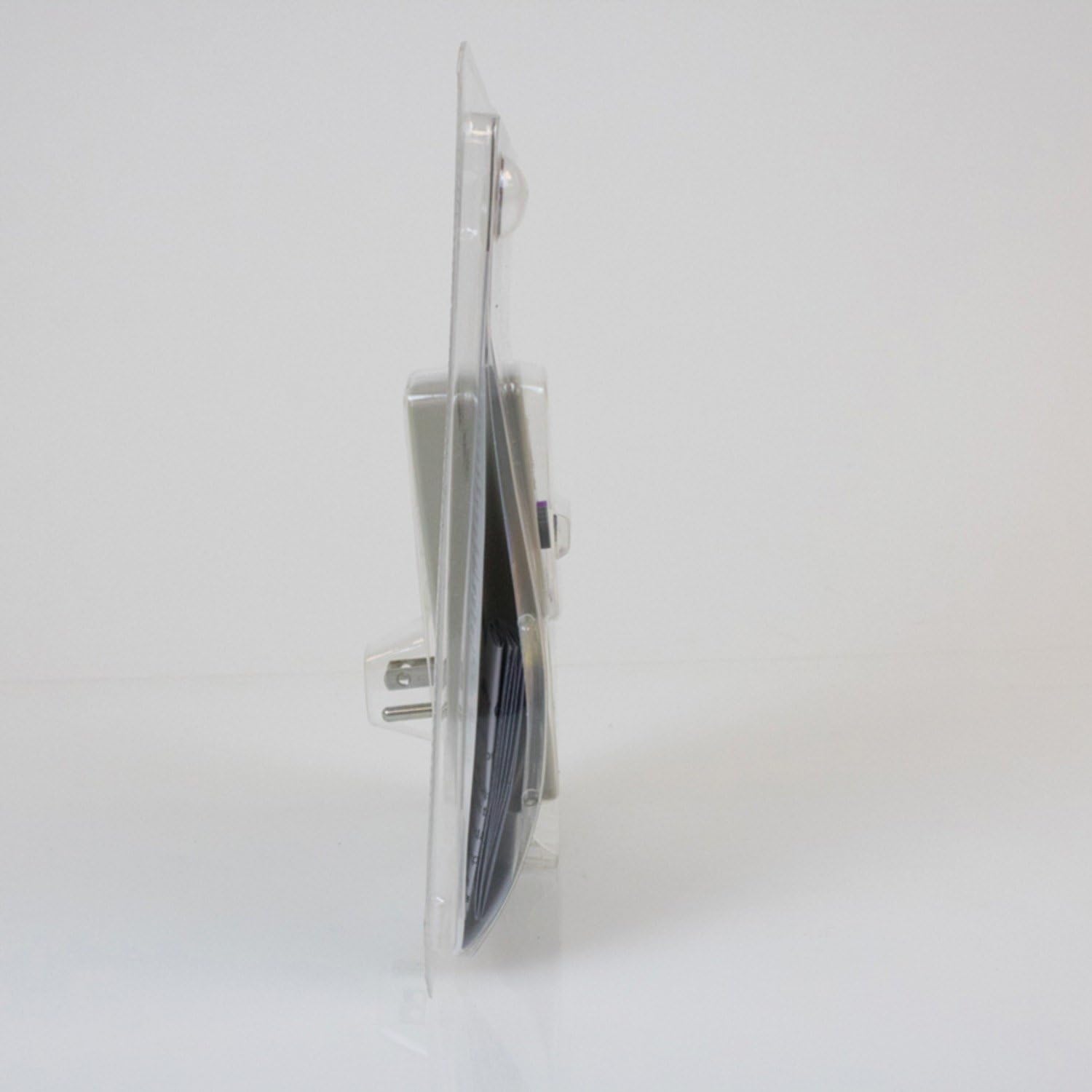

Empowers You to Save Hundreds on Electric Bills
Electricity bills are rising. Now you can cut down on costs and find out what appliances are actually worth keeping plugged in. Simply connect these appliances to the Kill A Watt, and it will assess how efficient they really are. The large LCD display counts consumption by the kilowatt-hour, the same as your local utility. You can calculate your electrical expenses by the day, week, month, even an entire year. Also check the quality of your power by monitoring voltage, line frequency, and power factor. Now you will know if it is time for a new refrigerator or if that old air conditioner is still saving you money. Kill A Watt can help you reduce your power bill and will help find power-wasting appliances so you are able to decide whether it is worth keeping them plugged in. For standard 115 VAC appliances only, 15 amps maximum, 125 VAC maximum.
Find Out How Much Electricity You’re Using
The U.S Department of Energy reports that 20% of our electric bills come from items that are left plugged in when they are not in use, or items that are in standby mode. With the Kill A Watt P4400 we can monitor the energy eaters in our homes and cut down our electric bills at the same time. Plug whatever item you want into the device and it will tell you the efficiency of that item by displaying the kilowatt per hour. This device will help you determine which items are costing you the most to run. The Kill A Watt also calculates voltage, line frequency, current, and power factor. You can calculate your electric bill before you even receive it from the electric company.
Test The Quality of Your Home’s Power
But measuring appliance consumption is just the tip of the iceberg. Because it can monitor voltage (Volt) and line frequency it can also test if an outlet is working, or evaluate the quality of the electrical power provided by your utility company. It can detect voltage drops around the house, help to predict brownout conditions or to make sure a new home’s outlets are in working condition before escrow closes.
About P3 International
Founded in 1987, P3 International is a privately owned manufacturer of solution oriented consumer products. For the last twenty years they have strived to develop products that are easy to use and ahead of their time. Thanks to their customer-centric attitude and support from their clients, they have experienced steady growth over the past decade.
They are committed to manufacturing high quality products that appeal to a variety of different people, from the environmentally conscious to the more technologically-minded consumer. With this philosophy driving them they are always looking for innovative new products which they can offer their customers.
Their unique products have garnered much attention, in particular the Kill A Watt. Reviews of P3 products have been featured in newspapers such as The New York Times and The Wall Street Journal.
Technical Specifications
- Accuracy: +/- 0.2%
- Input Power: 115 volts AC, 60 Hz
- Max Current: 15 amps
- Max Voltage: 125 volts
- Max Power: 1875 VA
- Dimensions: 5.1 inches long x 1.6 inches thick x 2.4 inches wide
- Approvals: ETL (c), ETL (us)
- Origin: China
- Manufacturer Warranty: 6 months
Choose from the Kill-a-Watt’s four settings to monitor your electrical usage
Monitor your electrical usage by day, week, month, or year
Features easy-to-read screen
Electricity usage monitor connects to appliances and assesses efficiency
Large LCD display counts consumption by the kilowatt-hour
Calculates electricity expenses by the day, week, month, or year
Displays volts, amps, and wattage within 0.2 – 2.0percent accuracy
Compatible with inverters; designed for use with AC 115-volt appliances

Everyday Reviews –
Accurate, Simple, and Addictively Useful
Accurate, Simple, and Addictively UsefulThe P3 Kill A Watt Electricity Usage Monitor is one of those inexpensive gadgets that quietly changes how you think about energy use. I first bought it to see how much power my old refrigerator was pulling—and ended up testing every appliance in the house. Setup is instant: plug it into the wall, connect any device, and the bright LCD display immediately shows volts, amps, and watts in real time. Leave it running for hours or days, and it totals up the kilowatt-hours (kWh), letting you see exactly what that appliance costs you per day or month.What makes it so helpful is how accurate and intuitive it is. You don’t need to be an engineer—just read the wattage and multiply by your utility rate. I found a few “phantom” power hogs drawing 10–20 watts even when off (like a cable box and an older UPS). It’s also great for testing PC builds, aquarium setups, or any electronics to ensure your power supply is sufficient.The build quality is solid, and the display remains easy to read even after years of use. The only caution: it’s designed for 115V North American outlets only—not for international use.Bottom line: A must-have tool for anyone curious about energy use or looking to cut electric bills. Simple, accurate, and surprisingly enlightening—it pays for itself quickly.
Danie –
Works as intended.
Works great helped estimate electrical usage on a few big appliances.
Neurologist –
Extremely Useful
Don’t bother buying the more expensive models of the Kill-A-Watt. The P3 model is more than enough. It will give you how many watts your device is drawing, as well as the number of amps, number of volts (at the outlet), and frequency (60 hertz). It also keeps track of the total number of kilowatts hours your device has used during the length of time you have been monitoring the device. To calculate how many kilowatt hours your device will use in a month, you just need a bit of simple math:(Watts/1000) x (number of hours device is turned on per day) x (31 days) = Kilowatt hours per monthExample for a 100 watt light bulb that is left on continuously for a month:(100/1000) x 24 x 31 = 74.4 kwh per monthNote that a kilowatt is 1000 watts and 1 kilowatt hour is the equivalent of ten 100 watt light bulbs burning for 1 hour.Electricity is billed in kilowatt hours so you can find out how much each kilowatt hour costs by contacting your electric company or looking on their website. Your electric bill should tell you how many kilowatt hours you used in a given month. It is easy to calculate how many tons of CO2 your electricity use produces. The EPA website estimates 6.8956 x 10⁻⁴ metric tons of CO2 per Kilowatt hour. I pay for 100% wind power through my utility, which only adds about $1.80 per month to my electric bill and we use a lot of electricity (about 1200 kwh per month). Part of this large number is the fact the landlord installed an electric water heater (a gas water heater would be much more efficient).I finally ordered a P3 Kill-A-Watt and wish I had ordered one 10 years ago because it would have paid for itself many times over. If you check various items in your home, you will be surprised at how much electricity things use. Many electrical devices draw 2 to 5 watts or more when they are turned off but left plugged in! When you count how many things you have plugged in in you home, this adds up. I now unplug things I am not using.One of the biggest energy wasters is the common light bulb, which wastes 98% of its energy as unwanted heat. For comparison, I have an old style Sony 32 inch TV (picture tube, not flat panel) that draws 150 watts. A single reading lamp with a common 150 watt bulb uses the same amount of electricity as this large TV. You are much better off using compact fluorescent bulbs which use FAR LESS electricity. Amazon sells GE compact florescent 100 watt (equivalent) bulbs that actually use only 26 watts. (Type “compact fluorescent 100 watt” into Amazon search). The compact florescent GE 60 watt (equivalent) bulbs actually use only 13 watts. These bulbs screw right into your existing lamps and light fixtures and will pay for themselves many times over. The downside of compact florescent bulbs is that they contain a significant amount of mercury (about 5 grams). There are special cleanup procedures you should follow if you accidentally break one inside–open a window, do NOT vacuum–see the EPA’s “Cleaning Up a Broken CFL” article for the full procedure […]Because compact florescent bulbs contain mercury, they must not be disposed of in regular trash. Call your local municipality to learn how to dispose of items that contain mercury–many municipalities have recycling programs for mercury containing items. A much better alternative to compact florescent bulbs are LED bulbs (do not contain mercury) which are a new technology and consequently expensive at the moment but prices will come down with time.A final note on the Kill-A-Watt regarding computer power supplies. I build computers and, prior to owning a Kill-A-Watt, ended up buying much larger (and more expensive) power supplies than I really needed because of some misleading information on the web. For example, the computer I am typing this on with a good Intel CPU and an expensive video card draws 130 watts at idle and 270 watts with both CPU and video card fully loaded (running Prime95 and 3DMark simultaneously). Unfortunately, I put a 750 watt power supply in this computer, which was totally unnecessary. It is important to purchase a high quality power supply, but you definitely don’t need a 750 watt power supply for a computer that draws 270 watts at full load.
OK –
Knowledge is Power: Manage Your Electric Bill the SMART and EASY Way
Ever wonder how many watts an appliance is using? I have. That’s why I bought this; I was wondering if my “tea machine” Tiger PDN-A50U Electric Water Dispenser, 5.0-Liter was an energy hog or a conservation appliance. Thanks to this, I now know it’s an energy SAVER.This could not be easier to use. Simply plug the meter into any wall socket. Leave it there as long as you like and use this meter like an electrical outlet. When you want to measure an appliance’s electricity use, you simply press the “Watt” button & the LCD display will show you the real-time wattage usage. For example, with my “tea machine,” when it boils water, it uses about 900 watts. Once it stops boiling, it uses just .3 watts, on average, to keep warm. When dispensing, it uses 62 watts (to power an electric pump), then immediately reverts back to its .3 watt “keep warm” usage.This can also be used as a voltmeter (measuring the electricity flow INTO the outlet). For American household power, this is roughly around 120 volts (except in “brown out” conditions). Useful to check during brownout conditions, simply because using some appliances during low voltage conditions can potentially damage them (this, fortunately, rarely happens in the US, but some Californians have occasionally experienced this).There’s also a purple KwH button. This will let you measure the KwH usage of an appliance over a period of time. If you have an appliance (say, like a stereo subwoofer) that you suspect might be a Vampire Power Energy Hog (one that uses a lot of power, even when turned off), you can easily confirm this suspicion by plugging it into this meter, pressing the KwH button, & then check in 24 hours and see how many KwH your appliance has consumed. If your subwoofer’s an energy hog, just unplug it when you’re not using it & you’ll lower your electrical bills.I LOVE this device, because it’s helped me logically evaluate actual energy usage, instead of just going by my “gut” feeling. Knowledge is Power!This is easy to use & well worth every penny of its cost. In just a month, it more than pays for itself, if you’ve not been paying sufficient attention to your energy use. Now, instead of guessing how much power you’re actually using to operate an appliance, now you can know. Great for everything from rice cookers, tea machines, toaster ovens, computers, printers, stereo equipment, battery chargers & more. A+!
Patrick Montague –
If you live in the UK, do NOT buy this product. It is not designed for the UK and you will have to return it. The company, so far, has refused to pay the return postage, even though this is entirely their mistake. I have no idea why it is not clearly labelled.
Jorge –
Fantástica compra, cumplió todas mis expectativas y al tener un soporte de hasta 1.8kw me permite medir dispositivos de alto consumo.Quien iba a decir que mi PC (solo el gabinete) consume 4 veces mas que mi refri de 7 pies. Gracias a esta maravilla, ahora lo sé.Recomendadísimo, entrega en excelentes condiciones y vino empaquetado con su bolsa antigolpes.
Phil –
1. Operating voltage is incompatible with Japan’s 100VAC.2. Seller support is poor and maker (P3) doesn’t respond to emailed questions.A waste of money.
David Nagle –
Very pleased with product. Thank-you.
Rod –
Bought this on Amazon UK and it does not state that it is not suitable for UK use – plugs are US(?). Will now have to pay a lot to return it to a US address. Not impressed.